
Quick Answer: One day in Split is enough to see Diocletian’s Palace, walk the Riva promenade, and get a feel for the city. Two days lets you add Marjan Hill and explore at a slower pace. Three days is the sweet spot — you have time for a proper day trip to Hvar, Krka, or Mostar without feeling rushed. Avoid July and August if you can; May, June, and September are significantly better.
I get asked this question more than almost any other: how many days do I need in Split?
The honest answer is: it depends on what you want from the city. Split is not a place you simply tick off a list. It is a living city — the kind where Roman walls have laundry hanging from them, where people drink coffee in 1,700-year-old courtyards, and where a fifteen-minute walk from the Palace puts you on a forested hill overlooking the Adriatic. You can do Split in a day if you have to. But the more time you give it, the more it gives back.
This Split itinerary is written for first-time visitors. I lead walking tours through Diocletian’s Palace every day, and these are the rhythms, sequences, and local priorities I actually recommend to the people I meet.
Before You Arrive: A Few Things Worth Knowing
Where to stay: For first-time visitors, stay inside or directly adjacent to Diocletian’s Palace and the Old Town. Everything in this itinerary is walkable from there, and waking up inside a Roman imperial complex is an experience you will not forget. Read my full Where to Stay in Split guide for neighbourhood-by-neighbourhood breakdowns.
When to visit: I will be direct about this. July and August in Split are very crowded and very hot. The Palace becomes shoulder-to-shoulder by mid-morning, restaurant prices rise, and accommodation fills months in advance. May, June, and September are significantly better — the light is beautiful, the sea is warm enough to swim, the crowds are manageable, and the city feels more like itself. If summer is your only option, that is fine — Split is still worth it. But go in early morning and late evening, and avoid the peak heat of midday.
Getting here: If you are flying into Split Airport, read my Split Airport Transfer Guide before you land — it will save you money and confusion on arrival.
Split in 1 Day: The Essential Split Itinerary
One day is tight, but it is enough to understand why people come back.
Morning: Diocletian’s Palace (8:00–11:00)
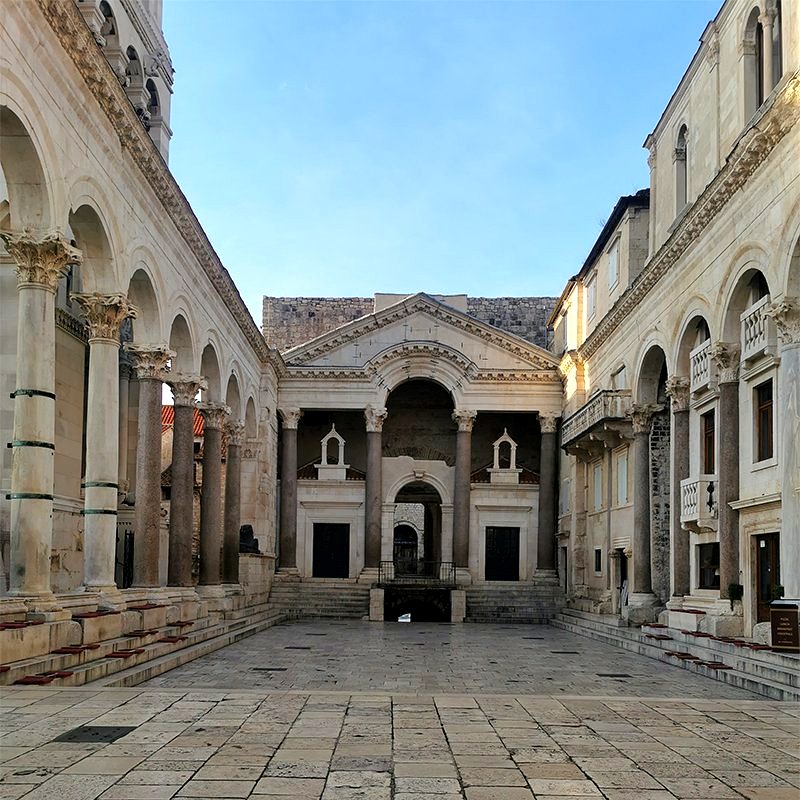
Start early. The Peristyle — the Palace’s central ceremonial square — is genuinely beautiful before 9am, when the light comes in at an angle and the stone seems to glow. By 10:30 it is busy. By noon it is packed.
Enter through the Golden Gate on the north side, the most monumental of the four original Roman entrances. Walk south along the Decumanus — the main east-west street — and you will arrive at the Peristyle naturally. From there, explore:
- The Cathedral of Saint Domnius — built inside Diocletian’s own mausoleum. The irony is worth a moment’s thought: the emperor who persecuted Christians became the patron saint of the city that took his palace.
- Jupiter’s Temple — small, easily missed, and directly opposite the Cathedral. Look for the Egyptian sphinx outside (one of only a handful in Croatia, brought from Egypt by Diocletian himself).
- The Underground Cellars — pay the entrance fee. They give you the clearest sense of the Palace’s original scale, and they are the only place where the full Roman floor plan is still readable. Most people skip them. That is a mistake.
- The Vestibule — stand underneath the open dome and look up. This is the best single photograph in the entire Palace.
If you want the context to make sense of all of this, my Essential Split Walking Tour covers all of it in two hours with the kind of detail that does not fit on any information board.
For the full history and practical details, read my Complete Diocletian’s Palace Guide.
Late Morning: Coffee on the Riva (11:00–12:00)
Walk south through the Bronze Gate — the original sea gate of the Palace — and you emerge directly onto the Riva, Split’s waterfront promenade. Have coffee here. Watch the ferries come and go. This is not tourist performance; this is what people in Split actually do on a Tuesday morning.
Afternoon: Lunch and the Old Town Streets (12:00–14:00)
Eat lunch in or around the Old Town. Wander the streets west of the Peristyle — the neighbourhood of Varoš climbs the hill behind the Palace walls and feels completely different from the main tourist circuit. Narrower, quieter, more residential.
Late Afternoon: Marjan Hill or Bačvice Beach (14:00–17:00)
If you have energy: walk up Marjan Hill. It takes about twenty minutes from the Old Town to reach the first viewpoint, and the panorama over the city and islands is worth every step. Read my Marjan Hill guide for the best routes and viewpoints. Alternatively, if the weather is right and you want to swim: Bačvice Beach is a fifteen-minute walk east of the Palace along the waterfront.
Evening: Peristyle at Dusk (19:00 onwards)
Come back to the Peristyle in the evening. It transforms. The stone turns warm gold, the restaurants set out their tables, and if there is any live music — which there often is in summer — it echoes off the ancient columns in a way that is hard to describe. This is the moment most day-trippers from Dubrovnik or the islands miss entirely.
Split in 2 Days: Room to Breathe
With two days, you can slow down, go deeper, and actually feel like you have been somewhere rather than simply ticked a box.
Day 1: As above
Follow the one-day itinerary. Do not rush it.
Day 2 Morning: Marjan Hill Properly (8:00–11:00)
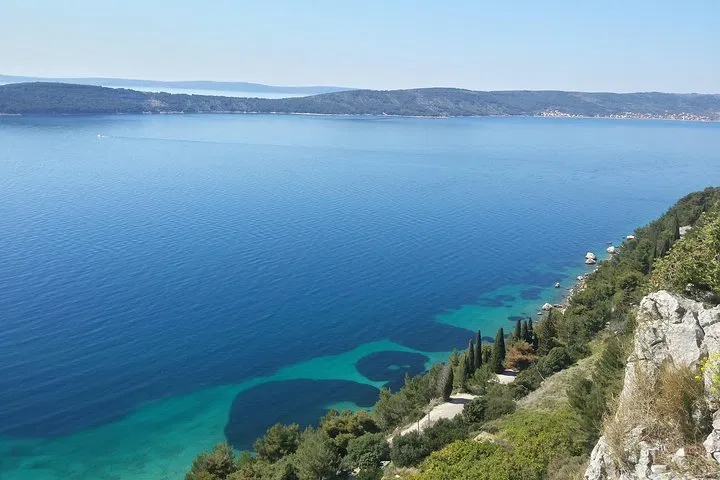
Dedicate a proper morning to Marjan Hill. The Marjan Hill Hiking Tour covers the forested trails, the small churches carved into the cliff face, and the viewpoints that look west toward the open Adriatic. If you go independently, start from Šperun Street and walk up through the pine forest — it takes around 45 minutes to reach the top at a relaxed pace, and the views over Split, the islands of Šolta and Brač, and on clear days even Hvar, are exceptional.
Day 2 Afternoon: Varoš Neighbourhood and Local Markets (11:00–14:00)
The market outside the eastern Palace wall — the Pazar — is where Split’s residents actually shop. Fruit, vegetables, local cheese, local wine, dried figs. Go on a weekday morning and you will see almost no other tourists. This is the side of Split that does not appear on Instagram.
Spend the afternoon in Varoš, the oldest Croatian neighbourhood in Split, climbing the narrow stepped streets west of the Palace walls. The architecture shifts from Roman to medieval to Ottoman-influenced and back again within a few hundred metres.
Day 2 Evening: Dinner and the Nightlife Circuit
Split has a genuine nightlife scene, centred on the bars along the Riva and the streets immediately behind it. It does not get going until late — this is the Mediterranean — but it is worth staying up for at least one night.
Split in 3 Days: The Sweet Spot
Three days is my honest recommendation for a first visit. It gives you time to know the city and do one proper day trip — which is the thing that makes Split’s location so remarkable. Within two hours of the city, you can be on Hvar, at Krka’s waterfalls, or in Mostar. Within three hours, Plitvice.
Days 1 and 2: As above
Day 3: Choose Your Day Trip
This is the decision that shapes your third day entirely. Here are my three recommendations:
Option A: Hvar
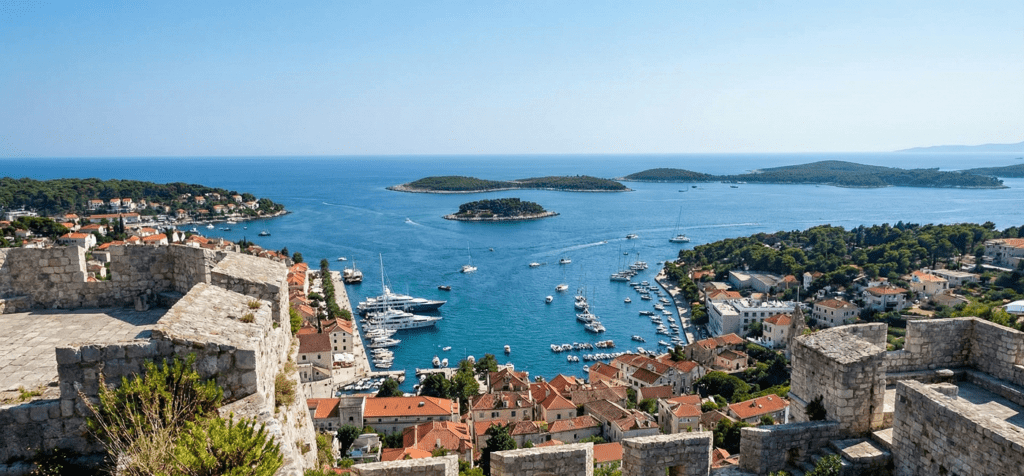
Hvar is the most visited island in Croatia, and for good reason — the old town is genuinely beautiful, the lavender fields in the interior are unlike anything else in Dalmatia, and the beaches around Pakleni Islands are spectacular. Take the early morning catamaran from Split harbour (around 7:30am, roughly one hour journey) and you will beat most of the day-tripper crowds. Come back on the late afternoon ferry.
The Blue Cave and 5-Island Tour from Split includes Hvar as part of a full island-hopping day — this is the most time-efficient way to see multiple islands in a single day. Read my Island Hopping guide for more on what to expect.
Option B: Krka National Park
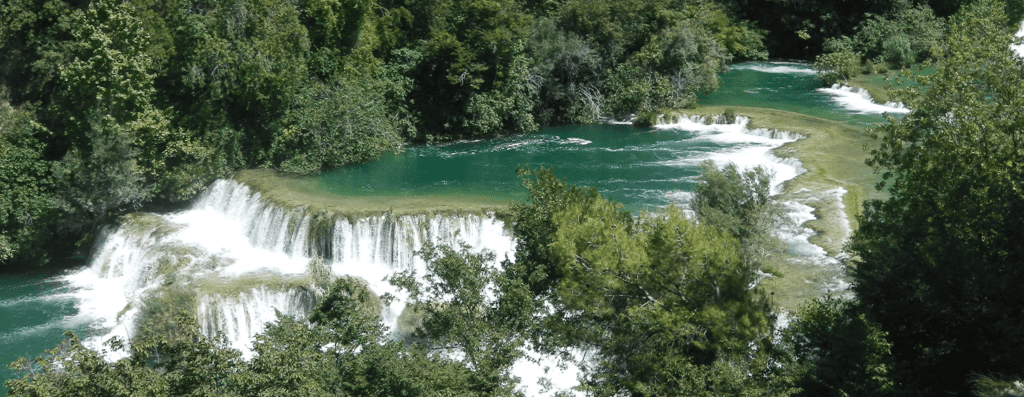
Krka is closer than Plitvice (about 1.5 hours from Split vs 2.5 hours) and in my opinion more enjoyable as a day trip — you can swim in the pools beneath the waterfalls, which you cannot do at Plitvice. The falls at Skradinski Buk are the main attraction, and they are genuinely impressive even if you have seen waterfalls before.
The Plitvice Lakes Tour from Split is the organised option for Plitvice if that is your preference — it handles all the logistics and is the easiest way to do a UNESCO site that is otherwise complicated to reach independently.
Option C: Mostar
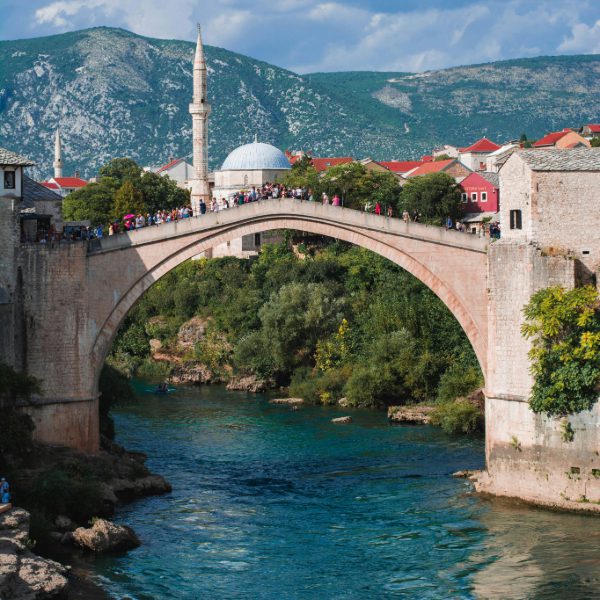
Mostar is the option most people do not expect to love and end up talking about for years. The drive from Split into Bosnia and Herzegovina takes around two hours, crosses a border that feels almost invisible, and deposits you in a city where Ottoman architecture, the Neretva River, and one of the most famous bridges in the world create something that feels entirely distinct from anywhere else in the region.
The Mostar and Kravice Waterfalls Tour from Split combines Mostar with the Kravice Waterfalls — a turquoise natural pool an hour south of Mostar that few independent travellers know to include. I recommend this combination over Mostar alone.
I have family in Sarajevo and Bosnia is close to my heart. If you can extend your trip, Mostar deserves more than a day trip. But even a day gives you enough to understand why it matters.
Practical Information
Getting around Split: The city centre is entirely walkable. You do not need a car for anything inside this itinerary — in fact, a car makes the Old Town harder, not easier, since most of it is pedestrianised. For day trips, organised tours are almost always easier than driving independently.
How much to budget: Read my Essential Split Travel Tips for a full cost breakdown — coffee, meals, entrance fees, and what things actually cost from a local perspective.
Common questions: My 10 Most Common Things Travelers Ask About Split covers most of the practical questions that come up repeatedly — currency, tipping, safety, language, and more.
Is Split worth visiting at all? Yes. Here is the longer answer: Is Split Worth Visiting?
Frequently Asked Questions
How many days do you need in Split? Two days is the minimum to see Split properly without feeling rushed. Three days is the ideal for a first visit — it gives you time to explore the city and do one day trip to Hvar, Krka, or Mostar.
Is 1 day in Split enough? One day is enough to see the highlights — Diocletian’s Palace, the Riva, and the Old Town. You will not have time for Marjan Hill or a day trip, but you will leave with a genuine sense of the city.
What is the best time to visit Split? May, June, and September are the best months. The weather is warm, the sea is swimmable, and the crowds are significantly more manageable than in July and August. October is also beautiful and increasingly popular with travellers who want the city almost to themselves.
Is Split or Dubrovnik better? They are very different cities. Dubrovnik is more uniformly beautiful and more intensely touristy — it can feel like a museum. Split is messier, more alive, and still a real city where real people live and work. Most people who visit both prefer Split for the atmosphere, even if Dubrovnik wins on pure visual impact.
Can you do Split as a day trip from Dubrovnik? Technically yes — it is about 3.5 to 4 hours by bus or ferry. But it makes more sense to stop in Split for two or three nights while travelling between Dubrovnik and Zagreb, rather than rushing it as a day trip.
What is the best day trip from Split? Hvar for beaches and beauty, Krka for waterfalls and swimming, Mostar for history and a completely different cultural experience. All three are worth doing if you have the time. If you only have one day trip, choose based on what matters most to you.
Jelena Tanjić is a licensed tour guide based in Split. She leads the Essential Split Walking Tour through Diocletian’s Palace daily.
Further reading: Visit Split — Official Tourism Board


